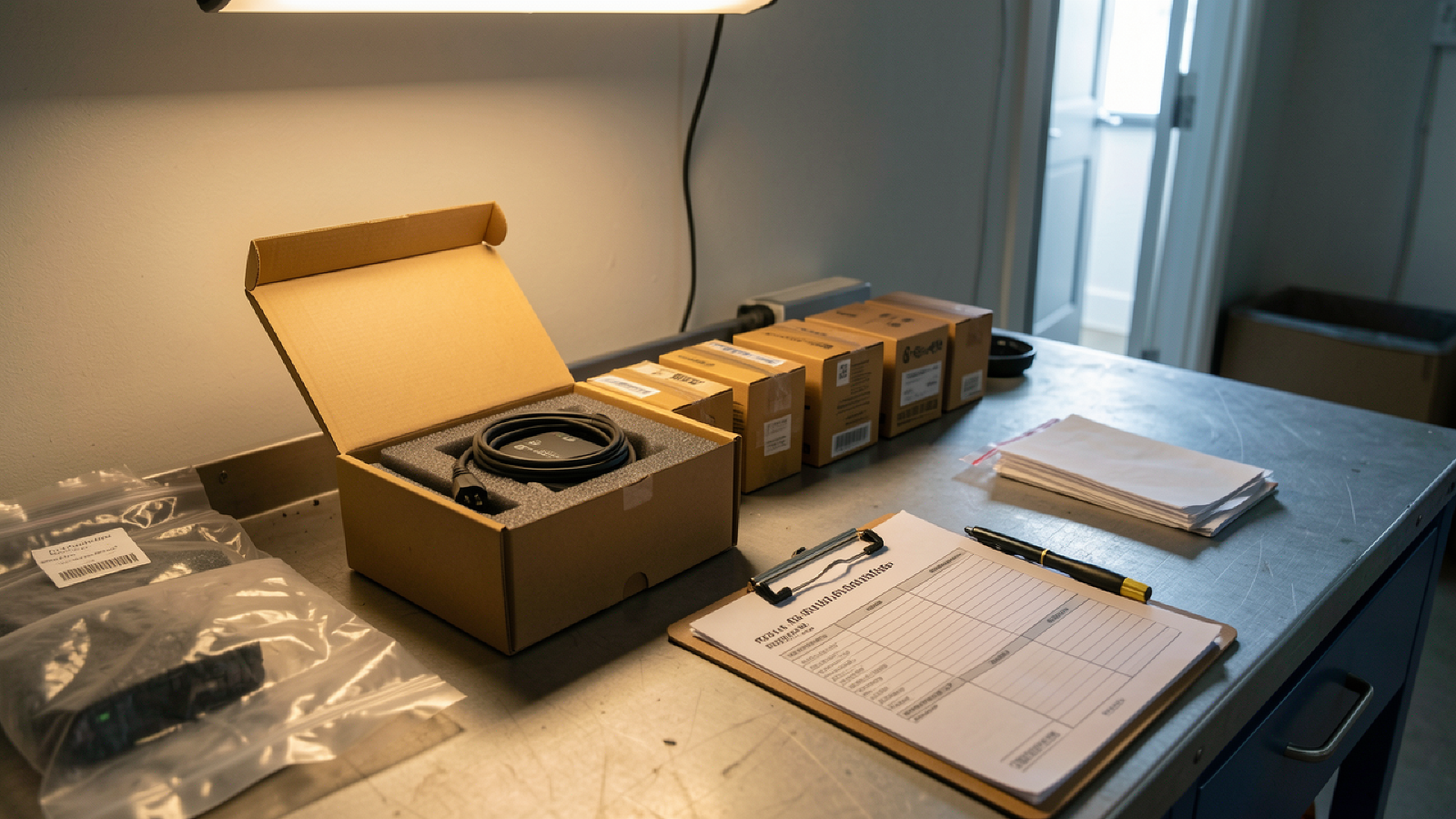
Sandra Okafor runs enrollment operations for a PACE program in Greensboro, North Carolina. She has enrolled four hundred participants in two years, and the process she knows is paper-intensive, face-to-face, and slow. When her program director told her they were adding an AI concierge platform to the PACE benefit, Sandra’s first question was not about the technology. It was about the enrollment workflow. Would she need to install something in every participant’s home? Would she need to teach a seventy-nine-year-old with mild cognitive impairment how to use a new device? Would the process break when a participant did not have WiFi?
The answers she needed were specific to each participant’s situation. That specificity is the design constraint.
The three subscriber acquisition channels#
Subscribers reach BlueMirror through three channels, each with a different acquisition cost, a different sales cycle, and a different consent architecture.
The institutional channel dominates. MA plans enroll members as a supplemental benefit. PACE programs enroll participants as part of the care plan. Employers enroll aging parents of employees through dependent care benefits. Care agencies enroll clients as a force-multiplier for their caregivers. Approximately 85 percent of subscribers come through institutional acquisition because their enrollment is bundled into a benefit they already have. The subscriber often learns about BlueMirror from a care coordinator, a social worker, or a benefits administrator, not from a marketing campaign. The institutional channel handles consent, eligibility verification, payer setup, and often hardware provisioning before the subscriber’s first interaction with the platform.
The provider-mediated channel is a referral path. A primary care physician recommends BlueMirror to a patient. A hospital discharge planner includes it in a post-acute care plan. A social worker at an Area Agency on Aging arranges access. The referral triggers the enrollment workflow, but the subscriber enrolls directly rather than through an institutional benefit. The provider-mediated channel accounts for approximately 10 percent of subscribers.
The direct-to-consumer channel serves adult children who find BlueMirror online and enroll a parent, or seniors who call an 800 number and enroll themselves. This channel has the highest per-acquisition cost and the longest decision cycle. It accounts for approximately 5 percent of subscribers. Direct-to-consumer subscribers are more likely to purchase dedicated hardware because the adult child who researches and selects the platform is also willing to invest in the device.
Hardware determination at enrollment#
Every subscriber is evaluated on three questions during enrollment. The institutional channel partner often answers these questions before BlueMirror is involved, based on their existing knowledge of the subscriber’s situation.
Does the subscriber have a smartphone? If yes, does it meet the minimum Zone 1-Phone requirements (BMT-09.01-A)? Does the subscriber want a dedicated Local Pane device, either purchased directly, provided by the institutional channel, or gifted by a family member?
The answers determine the subscriber’s initial deployment path. The enrollment workflow does not require the subscriber to understand the architectural implications. It presents the choice in plain language. “You can use your phone, get a small device for your home, or skip both. Here is what each option means for your privacy and what works when the internet goes down.” The care coordinator or enrollment specialist walks through the options. The subscriber chooses.
For PACE enrollees, the PACE program typically makes the hardware decision at the program level. Sandra’s program in Greensboro provides a Local Pane device to every enrolled participant because the program’s capitated economics support it and the care coordination benefits require the sensor hub functionality. Other PACE programs may choose differently based on their budget and care model.
For MA plan enrollees, the plan usually funds only the subscription, not the hardware. The subscriber chooses Zone 1-Phone if her phone qualifies, or No Zone 1 if it does not and she does not wish to purchase a device. Some plans subsidize hardware for high-risk members; the enrollment workflow handles both configurations.
For direct-to-consumer enrollees, the adult child or the subscriber makes the hardware decision at purchase. The enrollment workflow on the website guides the decision with the same plain-language explanation.
Onboarding for each path#
The first fifteen minutes differ across paths because Zone 1 changes what runs locally. The subscriber’s experience of “the system knows me” is identical across all paths because the Memory of Context is populated from enrollment data and channel partner records regardless of where inference runs.
Path A (Z1-Dedicated + Z2 + Z3): The device ships to the subscriber’s home. A care coordinator, family member, or the subscriber herself plugs it into power and connects it to WiFi (WPS push-button or guided setup through the companion app). The device boots, downloads the Zone 1 model portfolio (approximately 425 megabytes, under two minutes on a typical home connection), and prompts the subscriber to say her name. Three-minute voice enrollment captures her speech patterns for the Voice Tone Analyzer baseline. The device confirms it is connected to the Community Pane node and begins background sensor pairing if wearables or home sensors are present. The MoC is pre-populated from enrollment data: medication list, care team contacts, emergency contacts, dietary restrictions, and mobility status as provided by the channel partner.
Path C (Z1-Phone + Z2 + Z3): The subscriber downloads the BlueMirror app from the App Store or Google Play. The app runs a device capability check to confirm the phone meets Zone 1-Phone requirements. If the phone qualifies, the app downloads the Tiny LM portfolio (200 to 400 megabytes depending on the phone’s NPU optimization path). Three-minute voice enrollment through the app. The MoC is pre-populated from enrollment data. The app requests battery optimization exclusion and health monitoring background permissions.
Path F (No Z1 + Z3): The subscriber downloads the app (if she has a smartphone that does not qualify for Zone 1-Phone) or receives a phone number for the interactive voice response system (if she has no smartphone). App-based onboarding skips the Tiny LM download. IVR-based onboarding is voice-guided: the subscriber calls the number, confirms her identity, and completes a three-minute spoken enrollment. The MoC is pre-populated from enrollment data. The subscriber begins interacting with the concierge immediately.
Across all paths, the first interaction after enrollment is a greeting that demonstrates the system already knows her. “Good morning, Sandra. I see Dr. Williams is your primary care physician, and you take metformin and lisinopril. Let me know if anything has changed.” The greeting draws from the enrollment data, not from inference. The system has not yet learned her preferences; it has the facts her channel partner provided. Personalization deepens over the first days and weeks as the P-RLHF model (BMT-05.02) begins learning from her interaction patterns.
The first day#
The first twenty-four hours are calibrated to build trust without overwhelming.
Morning check-in: the system initiates contact at a time inferred from the subscriber’s stated routine (or a default of 8:00 AM if no routine was provided). “Good morning. How are you feeling today?” The response calibration is simple at this stage. The system listens more than it advises.
Medication reminder: configured from the medication list provided at enrollment. The system confirms each medication, dosage, and timing with the subscriber. “I have you taking metformin 500 milligrams with breakfast and lisinopril 10 milligrams in the morning. Is that right?” Corrections update the MoC immediately.
A friendly first conversation establishes baseline preferences. Does she prefer voice or text? Does she want morning check-ins or only when she initiates? Is there a family member she wants to receive weekly summaries? These preferences enter the MoC Layer 2 (interaction preferences) and begin shaping the P-RLHF model.
The system learns her on day one regardless of which zones she has. A Path A subscriber’s cognitive baseline is established locally by the Cognitive State Estimator running on her Local Pane device. A Path F subscriber’s cognitive baseline is established by the same model running in Zone 3. The baseline quality is the same. The processing location differs.
Hardware upgrade path#
A subscriber can move between paths. The migration is administrative, not disruptive.
A Zone 3-only subscriber who later acquires a smartphone with sufficient capability migrates to Path D (or Path C if a Community Pane has deployed in her region). The system detects the new device’s capability during the app installation, downloads the Tiny LM portfolio, and reconfigures her deployment path. Her MoC, preferences, interaction history, and P-RLHF model follow her. There is no data loss.
A Path C subscriber who later receives a Local Pane device through an institutional channel or a family member’s purchase migrates to Path A (if Zone 2 is present) or Path B (if Zone 2 is not). The Local Pane device syncs with her existing MoC on the Community Pane or Zone 3, downloads the model portfolio, and begins sensor pairing. Her experience is continuous.
A Path A subscriber who moves to a new region without Zone 2 coverage migrates to Path B. Her Local Pane device continues operating. Queries that routed to Zone 2 now route to Zone 3. She may experience slightly increased latency for heavy inference queries. The product capability is unchanged.
Migrations are logged in the subscriber’s audit trail (BMT-07.04). The subscriber is notified of the path change in plain language.
The subscriber who says no to everything#
The subscriber who has no smartphone, no interest in a Local Pane device, and no inclination to engage with a tablet. She is a Path F subscriber.
The system serves her through a basic web interface accessible on any internet-connected device (a library computer, a family member’s laptop), an interactive voice response system accessed by calling a phone number from any phone including a landline, or text message on a basic phone. The product is the same product. The client is thinner. The concierge architecture, the fifteen agents, the MoC, the deep reasoning available through Zone 3, the medication coordination, the benefits navigation: all of it is available through voice and text without a smartphone or a dedicated device.
The IVR interface is designed for the subscriber who picks up a phone and dials a number. She does not need to install software. She does not need to create an account through a web form. Her enrollment creates her IVR identity, tied to her phone number. When she calls, the system recognizes her, greets her by name, and picks up the conversation where she left off. Her MoC is populated from enrollment data and refines with each interaction. The voice interface supports natural conversation, not a menu tree of “press 1 for medications, press 2 for appointments.” She speaks, and the concierge responds.
The Zone 3 reasoning layer carries the same inference workload for her that it carries for any Path F subscriber. Her per-subscriber cost is higher than a Path A subscriber’s because Zone 3 inference costs more per query than Zone 2 inference. The Viability Gap Fund (BMT-10.02) is designed in part to cover this differential, ensuring that the subscriber who cannot afford hardware is not penalized with inferior service.
Sandra enrolled her first twelve PACE participants in a single afternoon. Eight received Local Pane devices. Three used their smartphones. One, a ninety-one-year-old who had never owned a phone with a screen, enrolled through a ten-minute phone call and began receiving daily check-ins through the IVR the next morning. All twelve were operational by dinner. The technology had adapted to the participants. The participants had not needed to adapt to the technology.
Cross-References#
BMT-09.01 The Three-Zone Architecture. The deployment paths that the enrollment workflow determines for each subscriber.
BMT-09.03 The Institutional Channels. The channel-specific enrollment workflows and funding structures that precede the onboarding described here.
BMT-04.05 Cognitive Capacity and Consent. Consent architecture during enrollment, including proxy consent for subscribers with diminished cognitive capacity.
BMT-07.02 The Health Record Integration. Health record data flows during onboarding that populate the initial MoC.
Technical Appendix BMT-09.02-A is available to partners and investors at partners.bluemirror.tech.