BMT-12.02 Executive Summary#
BlueMirror.tech | May 2026#
Wei-Lin Park is a robotics integration engineer at a Bay Area company building a multi-task home robot in the segment between vacuum robots and humanoid platforms. The hardware is mature enough for limited consumer deployment. The software is the bottleneck. Specifically, the software does not know enough about the person in the home to act in the person’s interest without explicit instruction for each task. Her team’s architectural question is whether to keep building the contextual model in-house or to integrate with a context provider whose architecture is purpose-built for the persistent, privacy-respecting, multi-domain context model the robot needs.
The robot problem is not a hardware problem. The robot’s actuators work, its sensors work, its task-execution code works. The robot fails because it does not know what the person wants in this moment given what she did this morning, what her body and mind are doing now, who is in the house, and what is on her calendar. Every household the robot enters starts the contextual model from zero because the robot’s local learning is bounded by what it can observe directly. Building a contextual model that approaches BlueMirror’s depth is a five-to-seven-year engineering investment in a domain that is not the robotics company’s core competence.
BlueMirror’s architecture treats context as a first-class product. The Memory of Context holds layered understanding of the subscriber across health, household, preferences, relationships, daily patterns, and the temporal patterns of cognitive and physical change. The context is not the robot’s to retain, modify, or extend. The context belongs to the subscriber, lives in BlueMirror’s architecture, and is exposed to the robot only as required, only with consent, and only for the duration of the task.
The integration takes two forms. Path A is the Local Pane Bridge. Subscribers who run a Local Pane device at home expose the robot to context through a local API. The robot communicates with the Local Pane over the home network. No data leaves the home. Latency is bounded by local network performance. Path B is the Cloud Bridge. Subscribers whose deployment uses Zone 2 Community Pane and Zone 3 cloud reasoning expose the robot to context through a privacy-filtered cloud API. The data flow is regional or cloud-based, with the membrane mediating every exposure. Latency is higher, on the order of two to three hundred milliseconds, which is acceptable for the request-response interactions home robots typically perform.
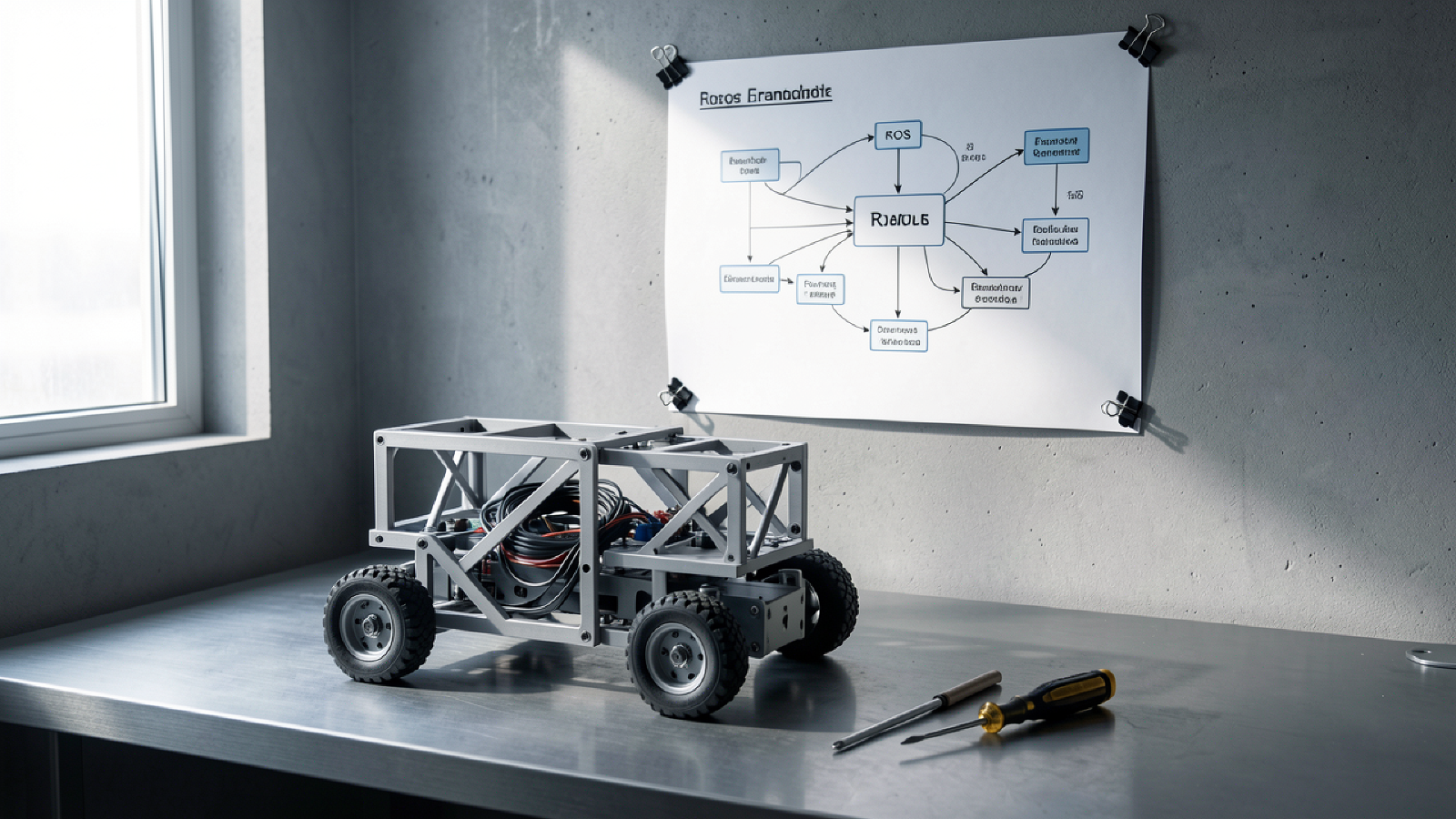
The integration uses a ROS-compatible interface. Robotics teams already build to the Robot Operating System framework, and BlueMirror’s context API is exposed as a ROS service. The integration is incremental: a robotics team can build to the API, test with simulated context, and deploy without a deep partnership negotiation. The contractual depth comes later, when production deployments require operational commitments. The architectural depth is consistent from the first integration through production.
The early subscriber population for home robotics integration is subscribers on Path A or Path B who already own home robotics. The Local Pane is the sensor and coordination hub, so the integration is most natural on those paths. As home robotics becomes more common across the subscriber population, the cloud-bridge integration extends to other paths. The robotics partner’s product team does not maintain two integration codepaths; the routing is handled by BlueMirror’s integration layer. The architecture does not assume every subscriber will have a robot. Home robotics is an option, not a default.
The timeline is honest about where the work is. The ROS-compatible context API is in design now. Prototype integrations with two robotics partners are under construction; the first integrations are scheduled to ship in 2027 as proofs of concept on the Path A subscriber base. Broader commercial deployment, including the cloud-bridge integration for non-Path-A subscribers, is a 2028-to-2029 timeframe. The pace depends as much on the home robotics market’s maturation as on BlueMirror’s build velocity. The integration is ready before the robots are widely deployed in the homes of the subscriber population.
Wei-Lin’s evaluation recommended that her company commit to the BlueMirror integration as the primary context source for home deployments and continue to maintain a minimal in-house contextual model only for environments where BlueMirror is not present. The recommendation was based on the architectural separation: her company is good at robots, BlueMirror is good at context, the combination is better than either company building both. Her company has shipped robots since 2022. They spent four years building contextual models that work in approximately thirty percent of deployments. The integration path takes that variable out of the product equation.
Read the full article at bluemirror.tech.